
Groundhopping Guide: Cork City
While many European leagues have finished, the League of Ireland continues over the summer. It’s the perfect time to visit Cork City.

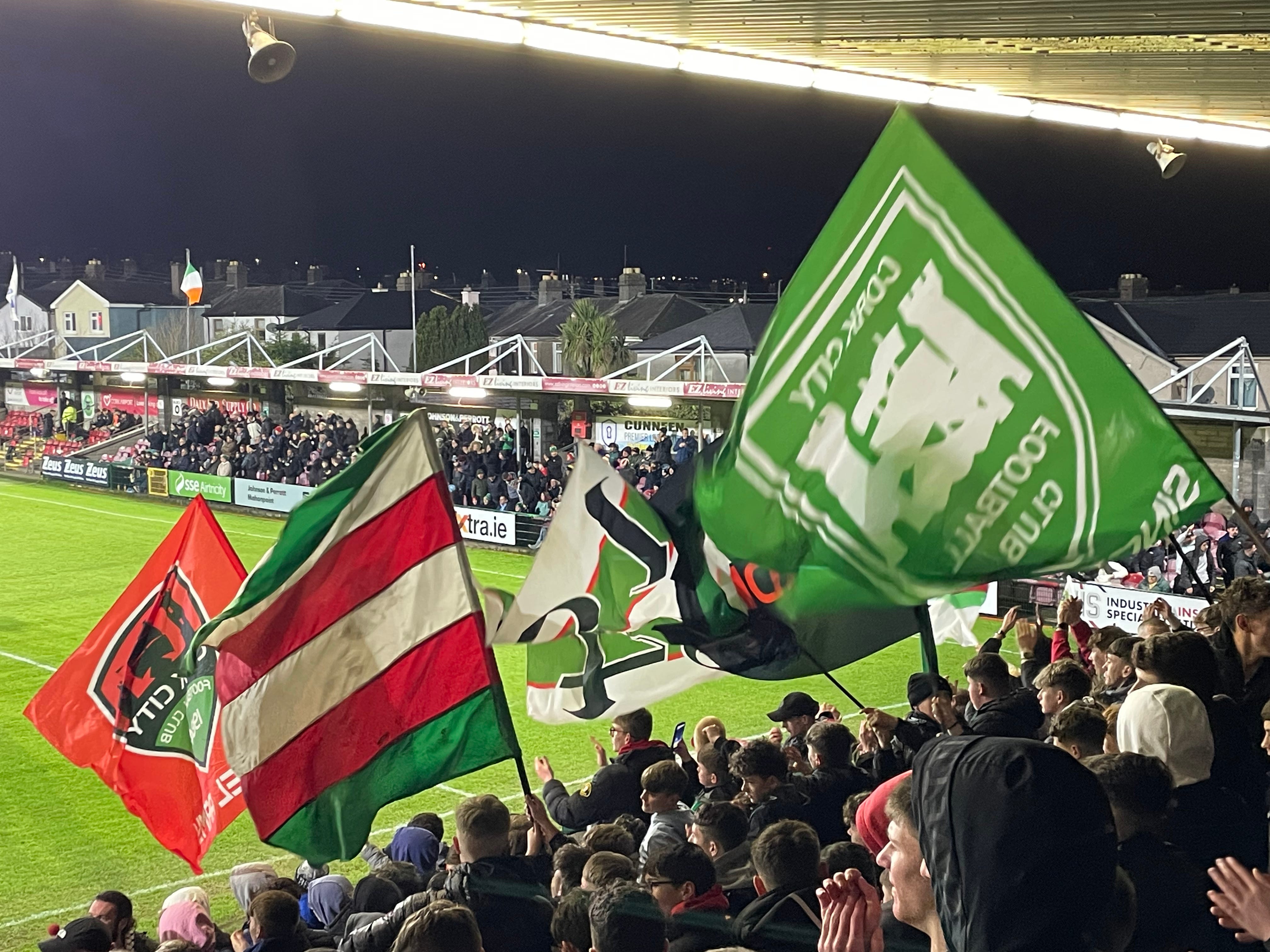
While researching my third book, Shades of Green: A Journey into Irish Football, I was adamant that Cork City would be a priority club to focus on. Cork is the third-largest city on the island of Ireland after Dublin and Belfast, although many of the locals will probably tell you it’s the first city of Ireland.
Despite its size, with a population just shy of a quarter of a million, historically, Cork has struggled to maintain a sustainable football club. The city has been represented by at least nine different clubs since the League of Ireland launched in 1922. The current iteration of Cork City was launched in 1984 and, despite some close calls, has lasted four decades, much longer than any other Cork club.
A brief history of Cork City
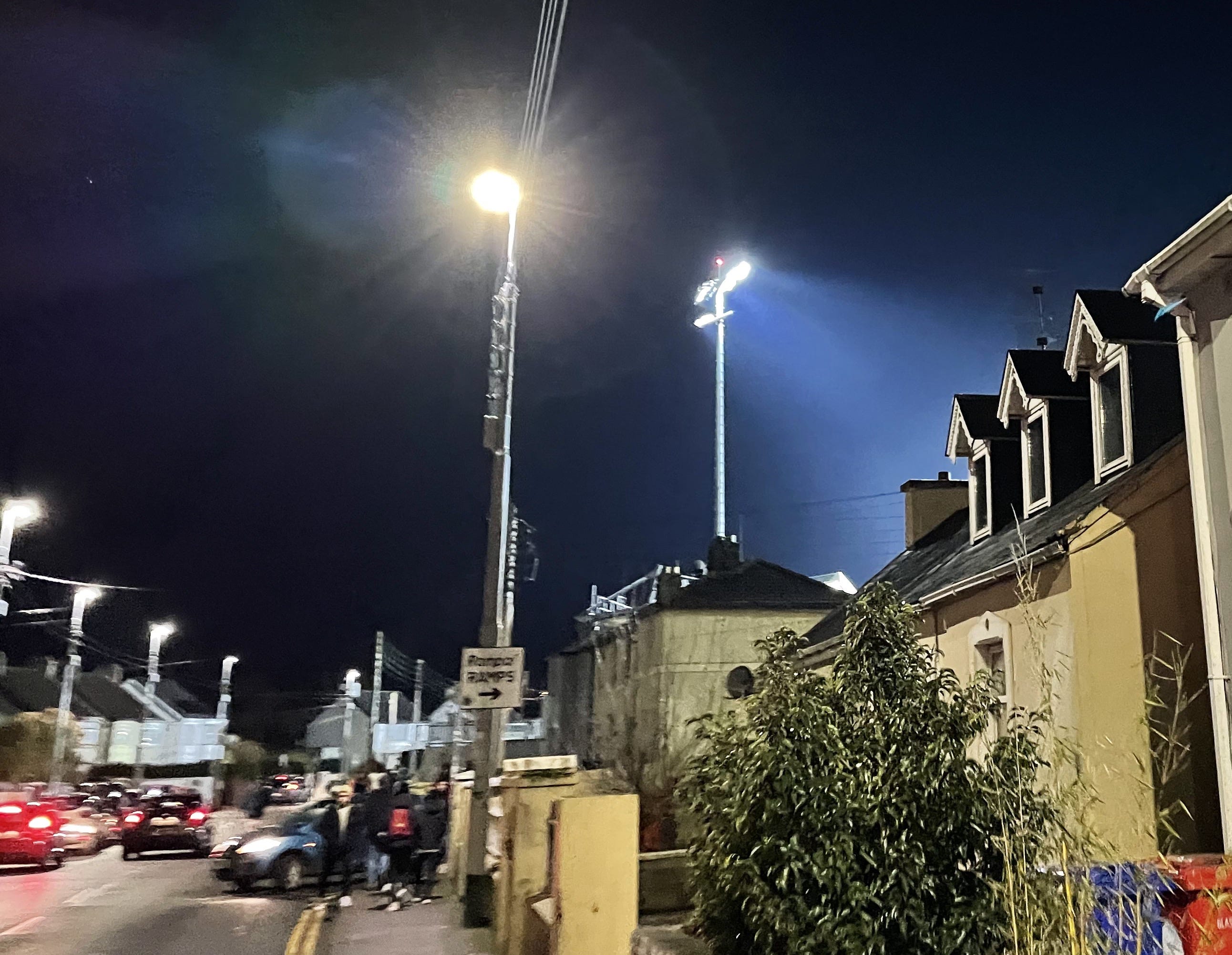
Cork City was founded to fill a gap left by the demise of Cork United. By 1986, the club had moved into its current ground at Turners Cross, a proper old-school ground where the floodlights rise above terraced housing.
Cork City’s early shirts are collectors’ items. Their 1984/85 debut season saw a classic Adidas green and white hooped shirt with red trim and Guinness sponsorship, reminiscent of QPR’s iconic kit of the same era. Between 1989 and 1991, the club wore an Adidas template modelled on West Germany’s celebrated zig-zag design, the same shirt in which the Germans lifted the Italia ‘90 World Cup, reworked in green and red.
Cork City’s European adventures peaked in 1991, when Bayern Munich arrived for a UEFA Cup tie. The Germans were managed by 1974 World Cup winner Jupp Heynckes and featured Thomas Berthold, Christian Ziege, and Stefan Effenberg. Dave Barry gave Cork a dream 26th-minute lead before Effenberg equalised. Cork fell 2-0 in the return, 3-1 on aggregate, but gave the Bavarians a genuine fright. Heynckes was sacked weeks later.
Cork City claimed their first League of Ireland title in 1992/93 after two rounds of play-offs against Shelbourne and Bohemians, all three sides having finished level on points. By the 2000s, the club needed the supporters to come to its rescue, and for many years, the club was fan-owned.
Nicknamed ‘The Rebel Army’ due to County Cork’s historical reputation to resist the powers that be, whoever they are at the time, Cork City can boast three League of Ireland titles and four FAI Cups. In recent years, the club has yo-yoed between the Premier Division and the second-tier First Division, where it finds itself in the 2026 season.
And Cork City draws international groundhoppers. Vincent Van Holt, from the Netherlands, was based in Cork for work and soon became drawn to the Rebel Army. “The first Cork City match I watched was the ‘distance derby’ against Derry City. I was in contact with the club beforehand, and they were more than happy to show me around the stadium,” he says. “The friendliness of the people made me feel welcome from the first moment I entered Turner’s Cross stadium.”
Vincent attended as many home games as possible that season, and also travelled to Dublin for the FAI Cup final against Dundalk. “I straight away became a member of the Supporters’ Trust [FORAS], and the more I visited, the more I became a fan rather than a visitor,” he adds. Despite now living back in the Netherlands, Vincent visits at least once a season and watches every match on LOITV. He still contributes to the matchday programme. I have to concur with Vincent; everyone I met at Cork City was incredibly accommodating and friendly.
The matchday experience at Cork City
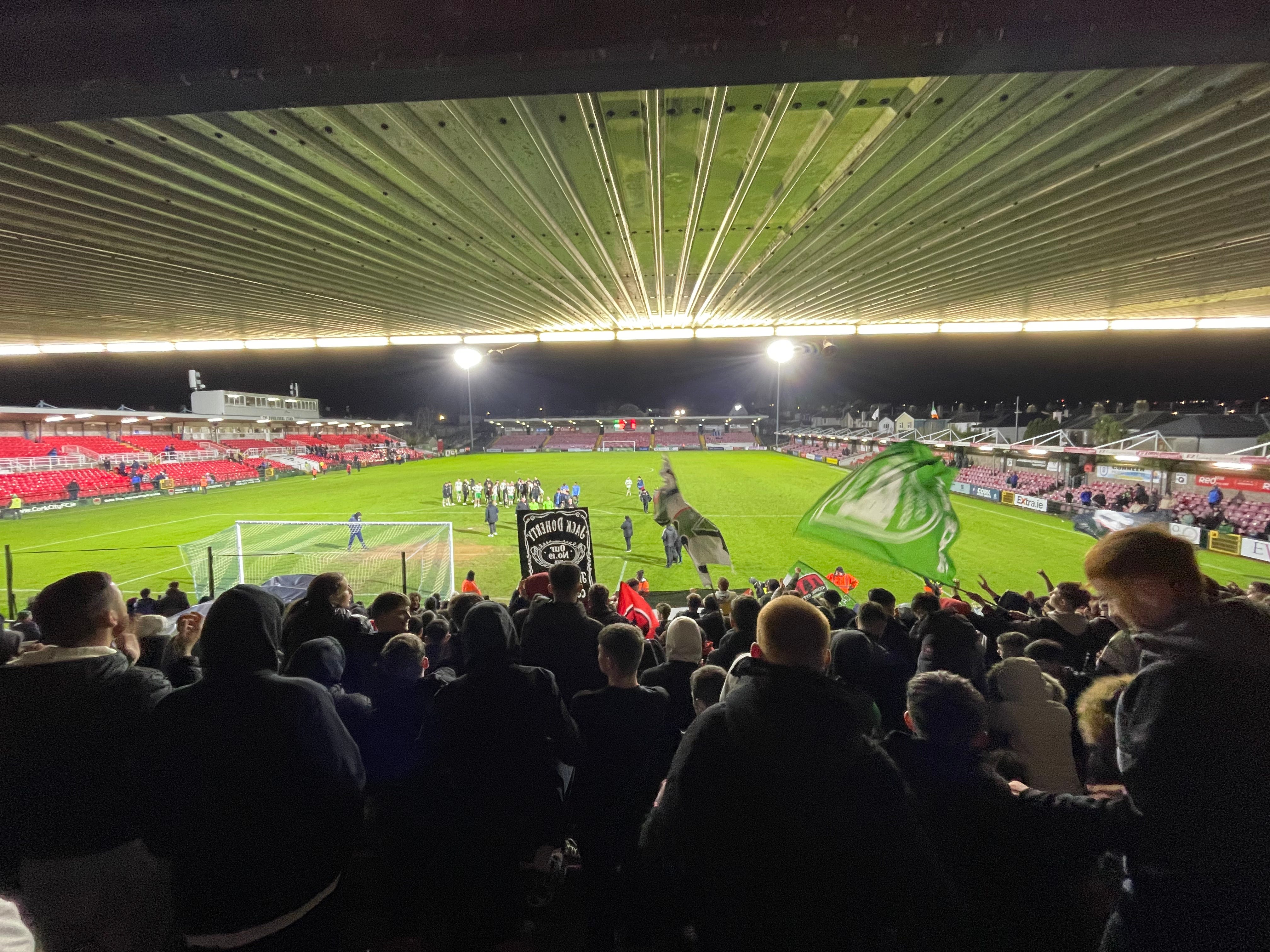
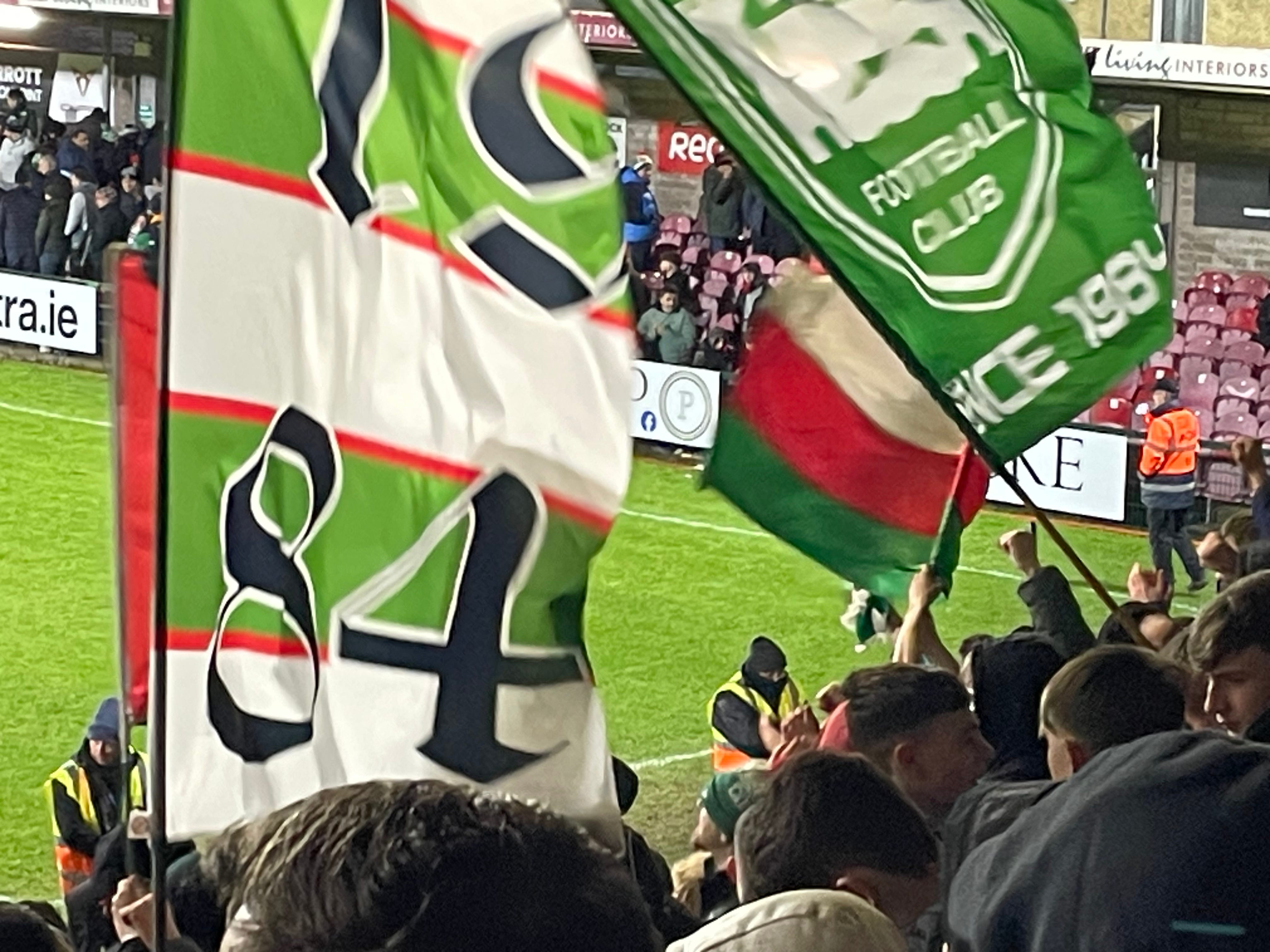
I stood in the stand behind one of the goals where Cork City’s main ultra groups congregate. The atmosphere was excellent despite the bitter cold. A wide range of green, yellow, red and white flags fluttered in the breeze, while tacked to the back of the stand, there were more political banners, such as the Starry Plough (an Irish republican and socialist symbol), a Basque Ikurriña, and several republican slogans. Terrace songs ranged from Depeche Mode to Dean Martin.
As the match I attended was against University College Dublin (UCD), which doesn’t bring many travelling supporters, the crowd for the First Division match I attended was just over 3,000. I’d love to go back for a game with a different side in better weather.
Single adult tickets for Cork City are €15, and you can buy them online from the club website. League of Ireland matches tend to be on Friday nights and midweek. Turners Cross is a 30-minute walk from the city centre through a residential area.
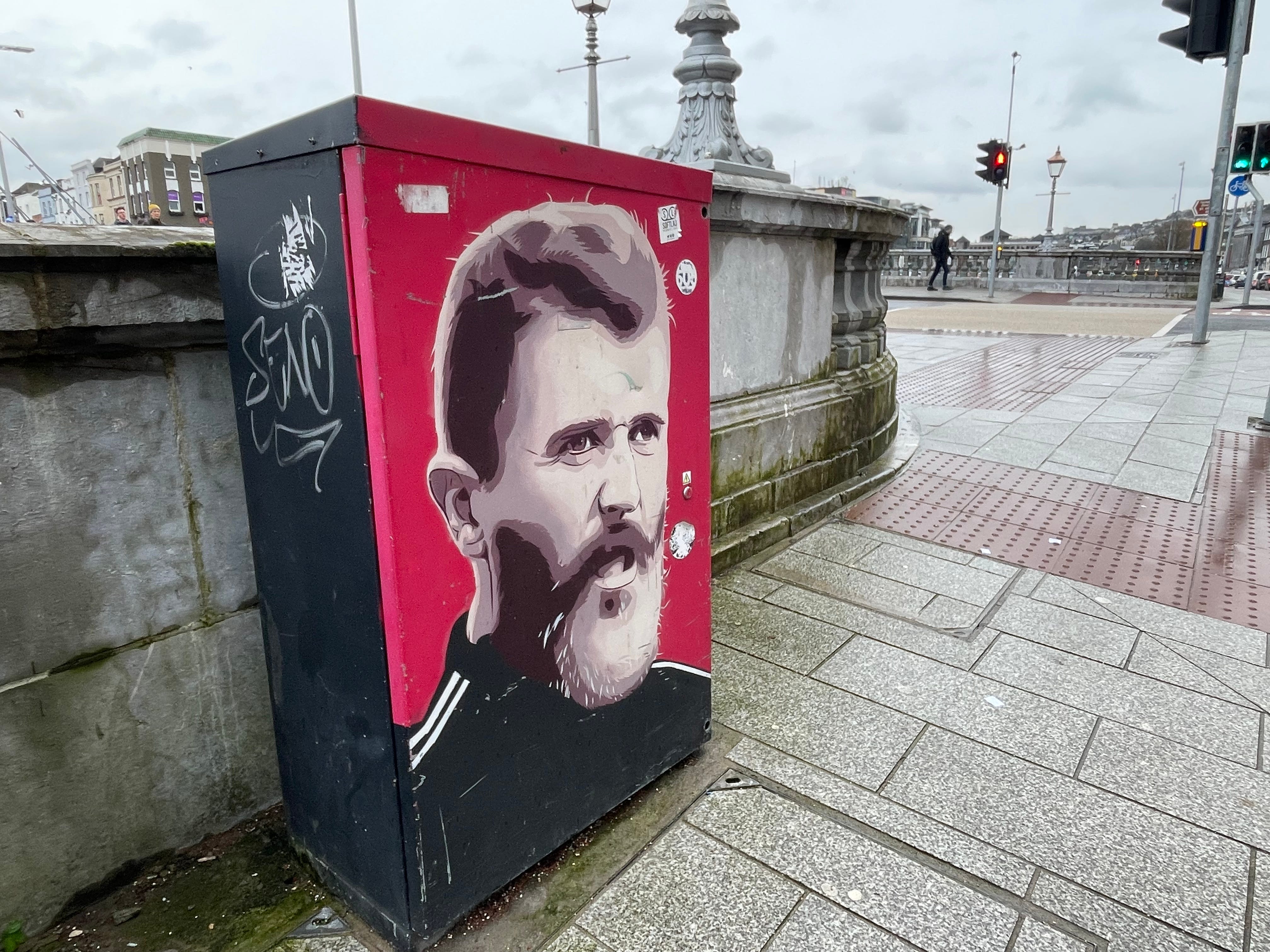
If you happen to be in Cork and City are away, it’s worth seeing if Cobh Ramblers are at home. Cobh is a lovely town about half an hour away by train. It’s famous for being the final passenger pick-up stop for the Titanic, and there’s an excellent exhibition there. Ramblers is where Roy Keane started his career, and there’s a mural of him on an electricity box in Cork.
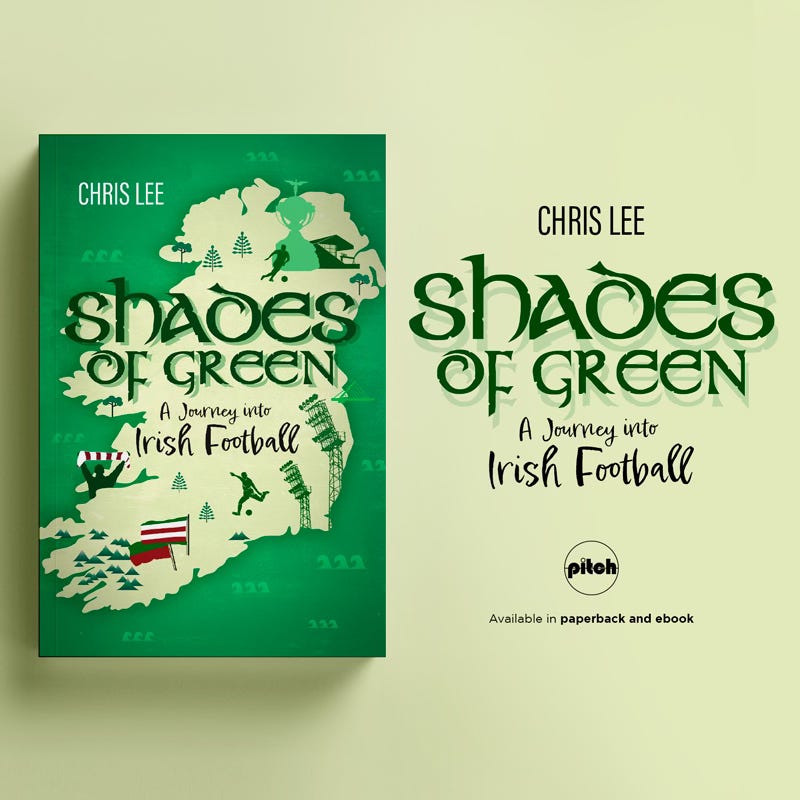
If you’re interested in discovering football in Ireland, please read my book, Shades of Green: A Journey into Irish Football. The Cork City flags inspired the icon in the Cork area of my book cover.
When I was getting ready for the Premier league play off final I found my old Cork City shirt from 2010. Brought back hilarious memories of a drunken city encounter with an ex Ipswich play and a subsequent meet up 😉