
Hajduk Split: Football, Resistance, and the Birthplace of the European Ultrà Movement
The Croatian city of Split boasts plenty of Roman remains and an idyllic setting between the rugged Dalmatian mountains and the turquoise Adriatic. It can also be proud of its football influence.

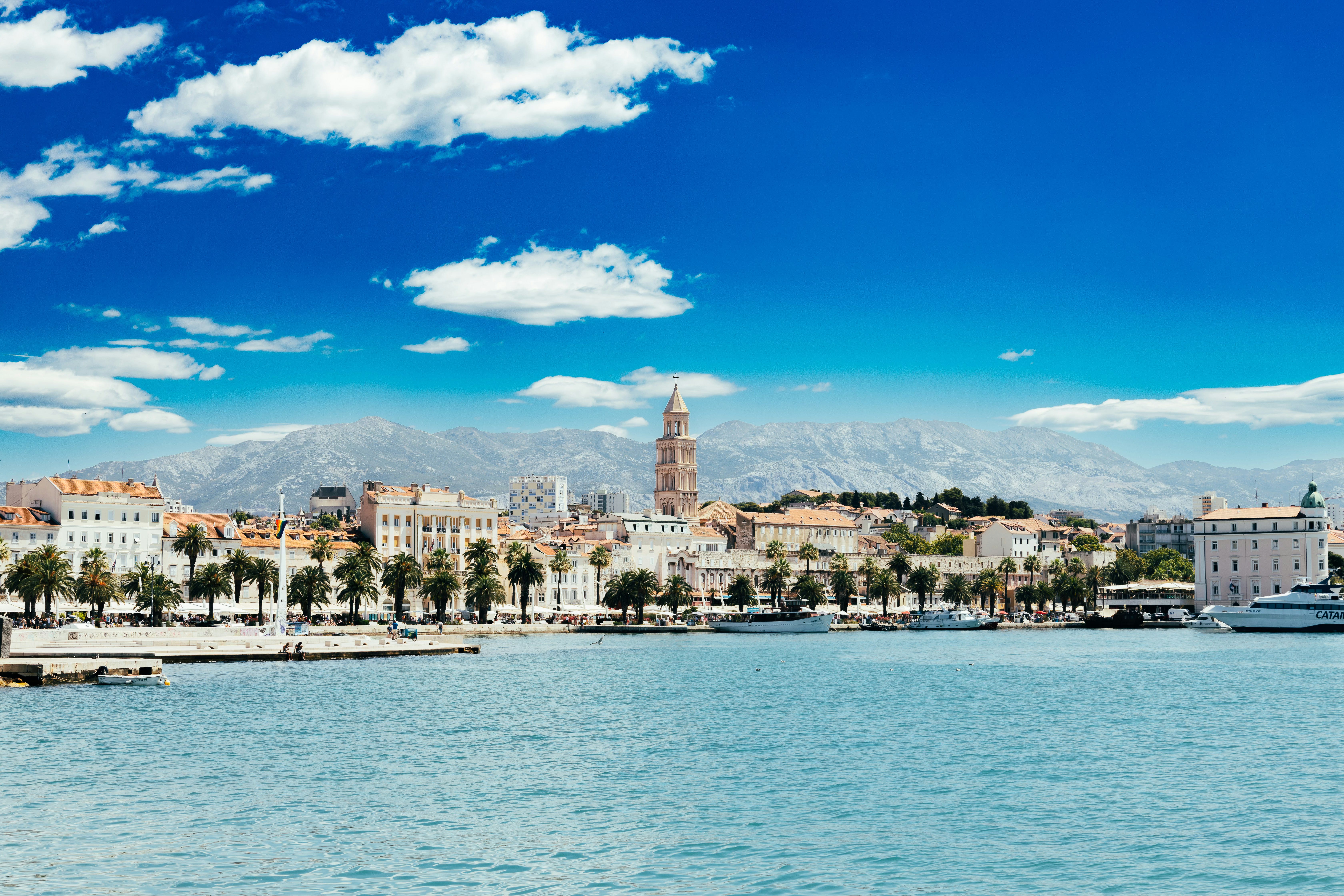
Wedged between rocky, pine-clad mountains and the sparkling blue sea sits the Croatian city of Split. The Romans liked it here enough to put down roots and build a palace for Diocletian, co-emperor for 20 years in the second century CE. The palace is still the beating heart of the old town.
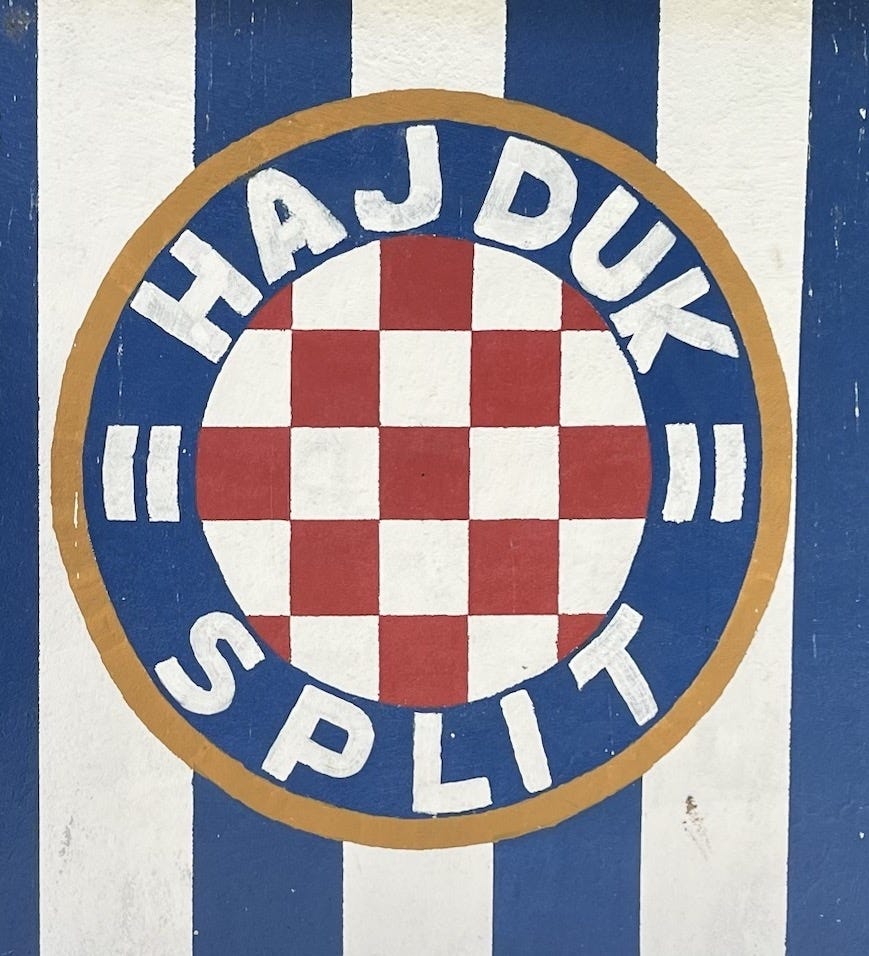
Yet, for all its antiquity, there is one modern sign you will see everywhere across the city: A blue circle with a checkered centre, crowned with the words ‘Hajduk Split’.
A brief history of Hajduk Split
Hajduk was founded on 13 February 1911 by Croatian students living in Prague. The work ‘Hajduk’ means brigand or outlaw, after the rebels of the wars with the Ottoman Empire.
When Croatia later became part of the new Yugoslavia after the First World War, football was becoming a vehicle for this emerging state’s national ambitions. Yugoslavia’s early international forays showed signs of improvement, from a 7–0 loss to Czechoslovakia at the 1920 Olympics to a remarkable run to the semi-finals of the inaugural World Cup ten years later; the sport had momentum.
Everything shifted in 1941. Yugoslavia’s flirtation with neutrality in World War II collapsed when its government briefly joined the Axis, triggering a coup and then a full German invasion. The country was carved apart; clubs with ‘patriotic’ names, like Belgrade outfit Jugoslavija, were forced to rebrand. Repression followed swiftly. One of its victims was Milutin Ivković, a former Yugoslavia international turned doctor and communist organiser. Arrested and executed in 1943, his body was never recovered.
In Croatia, the newly installed fascist Ustaša regime aligned itself with Nazi Germany and introduced its own terror. Football didn’t escape. Players were co-opted into propaganda efforts or targeted as enemies. One was Svetozar Danić of Zagreb’s HŠK Građanski, who represented the puppet-state national team in Vienna in 1941; upon returning home, he was arrested and executed in the notorious Dotrščina forest.
The Italian annexation of Dalmatia brought a different type of pressure. Italian authorities attempted to lure Hajduk Split into Serie A with promises of a new stadium and chartered flights on the condition that they Italianised their identity as ‘AC Spalato’. Hajduk refused. Rather than play for the occupiers, they dissolved.
That act of defiance would define the club’s wartime legend.
The resurrection of Hajduk Split as a national beacon of hope
In 1944, Hajduk was reborn on the island of Vis, a partisan stronghold protected by Allied forces. Players undertook a ten-day escape from Split, slipping past German patrols on foot and by boat. Once reformed, Hajduk became, in effect, the team of Marshal Tito’s resistance movement and a symbolic ambassador of the National Liberation Army. They faced British military sides stacked with professionals; one of their best-known matches was a 7–2 loss to a British Services XI in Bari. The scoreline mattered less than the symbolism; the debut of the new Yugoslav flag and anthem, in front of 40,000 spectators. Hajduk wore plain white shirts adorned only with a red partisan star.
From there, Hajduk undertook a remarkable wartime tour across the Mediterranean, from Italy to Egypt, Lebanon, and Palestine, serving both as entertainment for Allied troops and as a propaganda showcase for the emerging socialist state. Football leaflets featuring the Bari match were even dropped by the RAF over occupied Yugoslavia.
By late 1944, the front had receded enough for Hajduk, billed simply as ‘Yugoslavia’, to host the British Army in Split on 26 December. Eight thousand spectators saw the home side win 1–0, sparking a pitch invasion and celebratory scenes in a city that was just 10km from the frontline.
Elsewhere, football’s landscape was being reshaped. In Zagreb, Građanski, one of Yugoslavia’s pre-war powerhouses, was dissolved and reborn as Dinamo Zagreb under the new communist regime. Along with Hajduk and the two new Belgrade clubs, Crvena zvezda (Red Star) and Partizan, Dinamo formed Yugoslavia’s ‘big four’ for decades. Those rivalries grew ever more charged, culminating in the infamous Maksimir riot of May 1990, when ultras from Dinamo and Red Star clashed, and Zvonomir Boban kicked a police officer. In many Croatian minds, this match was the spark of the Homeland War and the country’s eventual independence.
Hajduk fans launch European ultra culture
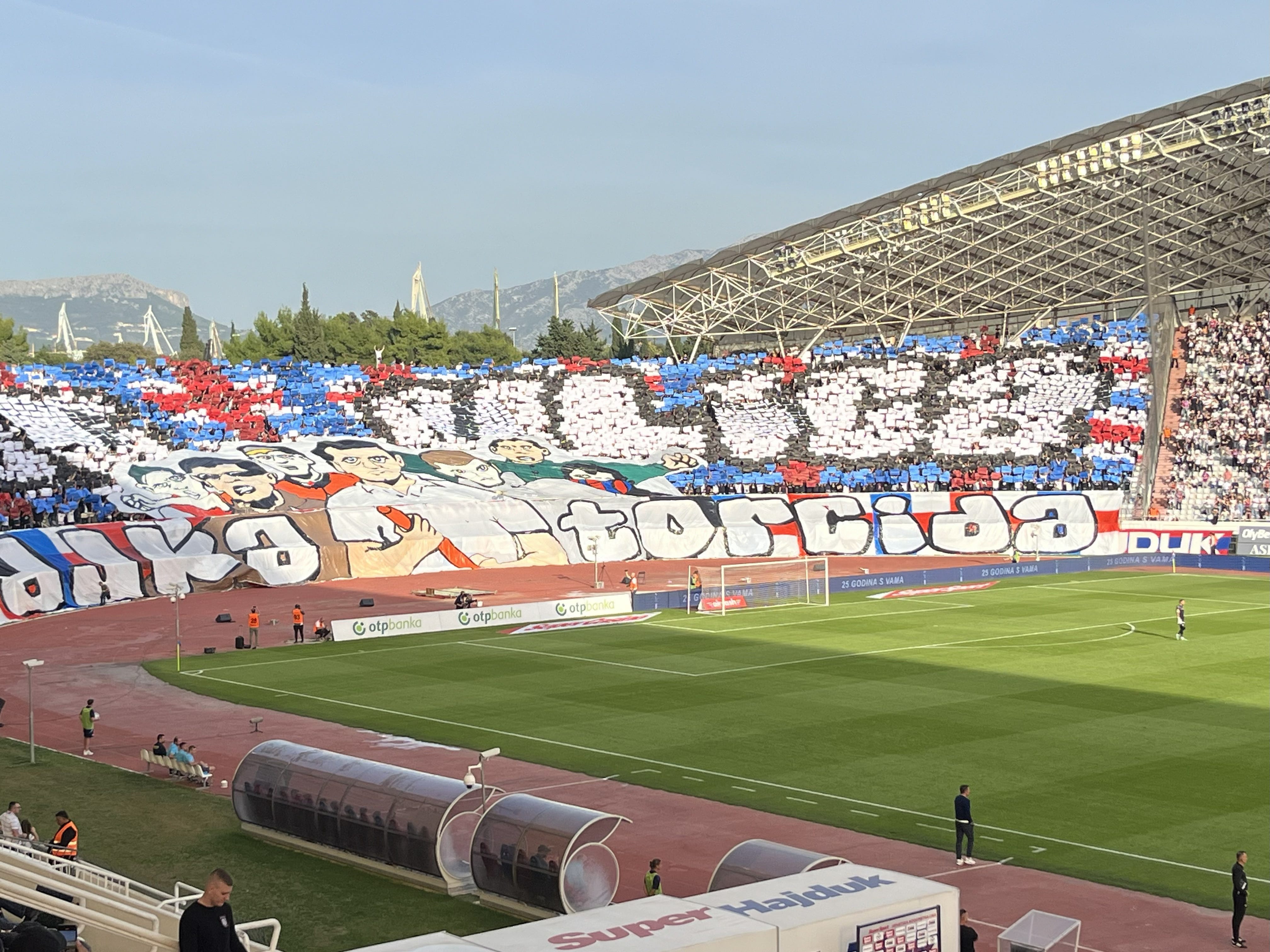
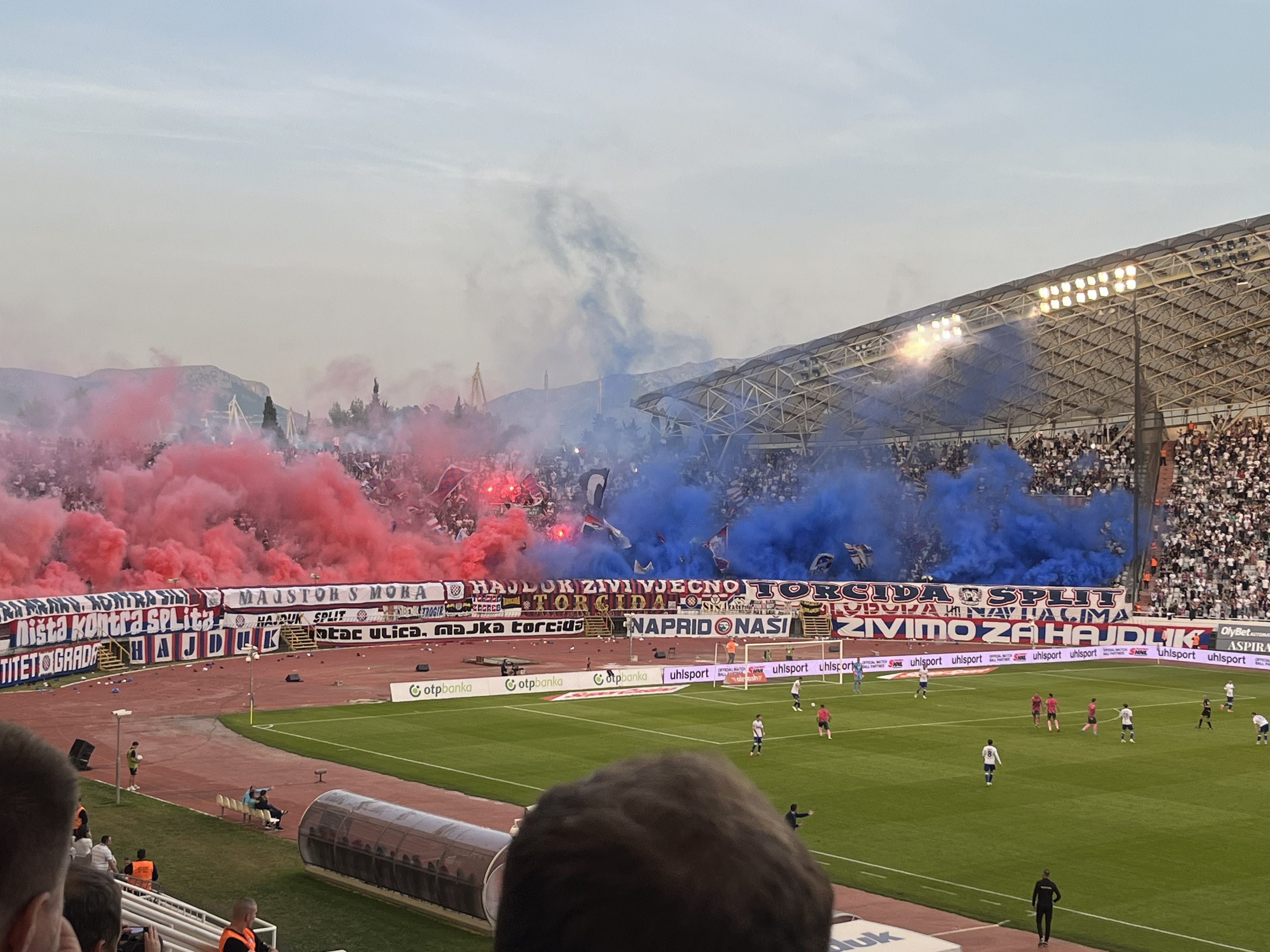
Hajduk’s influence extends beyond the pitch. The city can legitimately claim to have introduced ultrà culture to Europe. Yugoslav fans who attended the 1950 World Cup in Brazil returned captivated by the noise, colour, and organised passion of the local torcidas (fan groups). Inspired, Hajduk supporters created their own group, simply named Torcida. It was the first organised fan group on the continent. Their choreographed displays, songs, and all-encompassing match-day culture spread across Europe, especially to neighbouring Italy, where it would shape the ultras movement.
Hajduk’s identity today is inseparable from this layered history: a club founded by students, almost co-opted by occupiers, embraced by partisans, and later central to Yugoslav and Croatian football culture. Few teams anywhere can claim to have fought, quite literally, for the right to exist, or to have helped launch one of football’s most influential supporter movements.
Interestingly, the current political mood in Split is very different from the leftist vision of the 1940s side. A few years ago, I wrote a blog post listing Hajduk Split at one of the 11 most influential football clubs in football history, after which I was contacted by a Split-based publication to ask how I felt about many Hajduk fans’ apparent rejection of the 1944 side. I just said it was a great shame if that’s the case, as Hajduk were a beacon and embassy for the nation during its darkest days.
For more on footballing resistance to fascism in the Balkans and elsewhere, please pick up a copy of my book, The Defiant: A History of Football Against Fascism. Also, listen to this podcast on Hajduk, which I recorded with Croatian journalist Juraj Vrdoljak.
With thanks to Dylan Wilson for providing photos from his trip to Hajduk.
This makes you realise that the “importance” of a club can’t be measured by trophies alone. Sometimes it lies in the ways it shaped the imagination of a region, or the way its supporters exported an entire way of experiencing football to the rest of Europe. Hajduk seems to sit at the intersection of all of those things. Great piece.
Good stuff Chris. My interest in Hadjuk comes from 1972/3 when my team Wrexham played them in ECWC. We beat FC Zurich in Rd1 then drew Split. The first leg was my first European night at The Racecourse and we won 2-0, we were in the 3rd division, it was incredible. We got turned over 3-1 at their place, pre Poljud, but the few weeks around the tie were electric and I’ve never forgotten it, or Hadjuk Split